США решили бомбить Дамаск?
АРАБСКИЕ ХРОНИКИ. 17 июня 2016
Будут ли США бомбить Дамаск, как бомбили Триполи в 2011 году?
Десятки сотрудников Государственного департамента США подписали внутренний конфиденциальный документ, призывающий Барака Обаму немедленно начать войну против законного сирийского правительства, передает 17 июня The Wall Street Journal, ссылаясь на источник в руководящих органах страны.
Документ призывает Вашингтон немедленно начать «целенаправленные военные удары» против правительства Башара Асада.
Телеканал ЕВРОНЬЮС тоже сообщил 17 июня:
«Американские дипломаты подвергли резкой критике политику администрации Белого дома в Сирии. Внутренний меморандум подписали более 50 сотрудников Госдепартамента США. Они призвали американского лидера Барака Обаму начать военные действия против сирийского президента Башара Асада»…
Об этом послании, в частности, сообщили американские газеты “Уолл-стрит джорнэл” и “Нью-Йорк таймс”. В Госдепартаменте признали наличие меморандума…
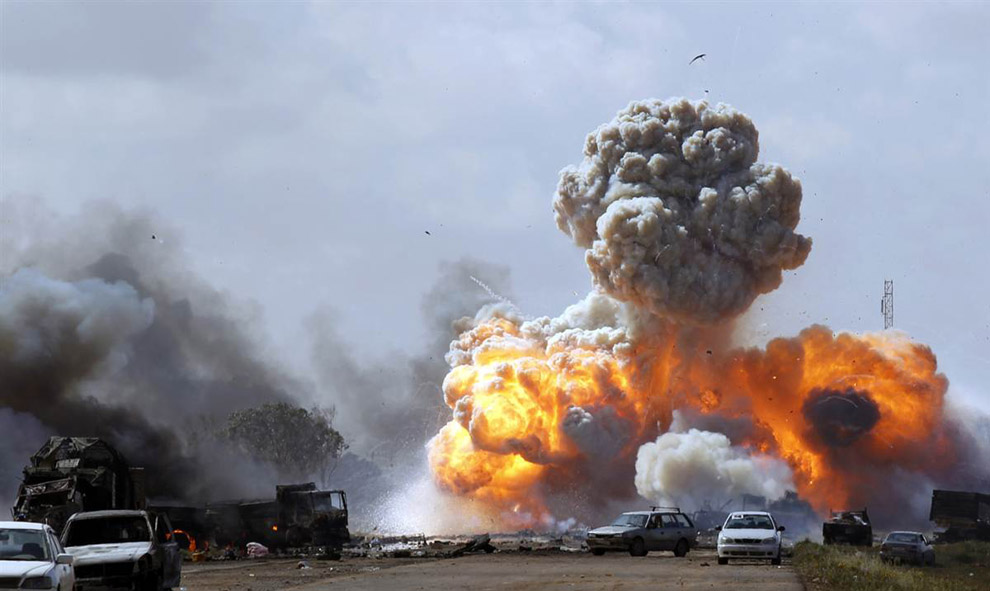
Вспоминается, что в 2011 году США решили разбомбить Ливийскую Джамахирию, когда их «сукины сыны», мятежники и террористы Аль-Каиды, потерпели поражение от Ливийской армии. И первые бомбовые удары были нанесены по столице Ливии. История повторяется?
Думаю, что нет. Военные действия США против Сирии и бомбежки Дамаска означают не только против Сирии, но и против других стран. Вы знаете каких….
Подробнее:
http://ru.euronews.com/2016/06/17/syria-us-diplomats-urge-anti-assad-military-strikes
Оказывается, среди подписавших есть и сам госсекретарь Керри?
Вот это финт, если это правда!!!!!!!!!!!!!!!
"Мальбрук в поход собрался"
http://nacsnews.com/page/adaptive/news/207445/
Remarks at the Oslo Forum
Remarks
John Kerry
Secretary of State
Oslo, Norway
June 15, 2016
SECRETARY KERRY: Well, good morning, everybody. Borge, thank you so much for a very generous introduction. More importantly, thank you for a wonderful welcome back to Norway and to this pretty idyllic and appropriate setting for the discussions that you all are engaged in, and that I’m privileged to take part in this morning.
I really want to begin by thanking Borge. And I am looking around and seeing so many faces – Espen, others – who – Jan, people that I’ve been privileged to be engaged with over the course of, particularly, these last years, but even the time I served as chairman of the Foreign Relations Committee.
I am grateful to the Royal Norwegian Ministry of Foreign Affairs, who helped to bring everybody here for this important gathering; to the Centre for Humanitarian Dialogue; and I particularly thank Norway for its unbelievable, consistent commitment to resolving conflicts, to giving so much of its national value system to all of our efforts. President Obama and I like to say that Norway bats way above its weight, punches way above its weight, and there isn’t one of you here who doesn’t come here with a large measure of gratitude for what Norway itself does to help the rest of the world. So thank you, Borge. I think everybody here is deeply, deeply appreciative for what you do.
I want to thank everybody for the statements over the last two days of solidarity and condolence with respect to the events of Orlando. Needless to say, this is happening with a recurrence rate that disturbs everybody. And there is no way that any of us can allow this to become a new normal. This has to be stopped, and everybody here understands that.
I think I am privileged to speak this morning to a group that could be described as either “peace warriors” or “masochists” – (laughter) – which might be more appropriate. But it really is my privilege to share a few thoughts with you. And I particularly look forward to the Q&A session. I think those are always perhaps even the most productive.
It’s also – let me just share with all of you – a pleasure for me to be back in Oslo. When I was 14 my Dad was posted to the U.S. embassy here and I came here and spent some extraordinary time learning how to cross-country ski up in back of the Holmenkollen, and playing in Frogner Park, climbing the hills, sailing the fjord. And I developed then a very deep affection and respect for Norway itself that has only grown over time as professionally I have been able to be engaged and see the full measure of what Norway does in the ways that I just mentioned a moment ago.
Borge is a great partner in this. And usually I am known for having put on a few miles in traveling. I usually find that either he’s coming after me or he’s been there before me. So he does an amazing job.
But right before I came to Oslo my family lived in Berlin. And I lived there for a period of time and went to school over here, in Europe. And I got a child’s-eye view of East-West relations, especially when I rode my bicycle without permission into the Communist sector of Berlin and I was promptly – when I proudly came back and told my dad what I did – I was immediately summarily grounded and informed that I could have caused an international incident, which was a pretty good lesson for a young kid about what was going on.
Later, I was an 18-year-old freshman in college during the Cuban Missile Crisis. I was 22 when I joined the Navy and 23 when I deployed for my first tour in Vietnam. And by the time the Berlin Wall fell in 1989, I was in my forties and serving in the United States Senate. And the Cold War had obviously, clearly significantly shaped my world view throughout those formative years.
The stakes of that period felt incredibly high, and that’s because they were. It was also a time when the challenges for those of us in either NGOs or public policy positions and public life were pretty clear. The “what to do about it” was limited in its options. And when the primary forces shaping our world were in fact leaders of recognized states, and mostly it was state action that was defining conflict. For the most part, it was a bipolar world: a Soviet Union-versus-the-West, locked in a strategic conflict. That is not to say that’s all there was, but it was, for the most part, the defining concept.
And the world that confronts us today is just absolutely so different in so many ways. It is a much more complicated world. Now non-state actors compete with national governments for influence and for power. And the cliche of technology bringing the world closer is actually a stark reality in a world that is filled with extremism and with conflict. Disturbing images and outright lies can circle the globe in seconds. And that makes the task of governance that much harder, the task of building consensus around facts, not fiction, not emotion.
And conflicts are now fought using an eclectic mix of weapons, and often by combatants who are very difficult to distinguish from ordinary civilians. And while the world as a whole is much more prosperous than it has ever been, inequality has also grown in almost every country, fueling instability. And weak or corrupt governance, a corruption level that I have to tell you has stunned me as Secretary of State – I knew there was corruption, we’ve all known it.
Like many – I used to be a prosecutor, and like many things in criminal enterprise, including the world’s oldest profession, there is a distinction between it being a status crime or a crime and something that tears at the fabric of life itself. But today we see a corruption level that is stealing the future from people all over the world. Hard-earned revenue that should be going to the state – and I’m talking about whether it’s in Yemen, which saw billions of dollars stolen, or in Nigeria – and you can run the list. And money deposited in banks that are supposedly in good standing with the world. How you have billions deposited in some banks is beyond my comprehension, without more questions being asked. And it is incumbent on all of us to begin to do more.
But the bottom line is that the number of failed or failing states as a consequence of bad governments is growing, not diminishing. And it is robbing too many citizens of economic opportunity and hope. And all the while, this thing called climate change is looming out there, a decidedly different challenge but, let me tell you, one that is existential and already impacting our lives, giving us a preview of the planet-wide catastrophe that we would face if we don’t change course. And with it, the kinds of catastrophic movements of people. If we think we see refuges today, imagine what would happen when whole rivers dry up and food shifts and production is limited and people are fighting over those limitations.
No less an authority than Henry Kissinger told me recently that the world we are dealing with today is far more chaotic and complex than what he maneuvered through in the late 1960s and early 1970s. And through much of the modern era, our focus as a global community has been on trying to build peace among nations. But in recent decades, the failure to preserve peace within nations has been the cause of enormous and unprecedented suffering. So while peace remains our goal, the dynamics have actually changed quite a bit, and in many ways, working towards that goal has actually become even more challenging.
And that is why we have to be clear about what we mean when we talk about “peace,” because in today’s world, obviously, it offers different possibilities. For instance, we cannot be content that peace is merely about the absence of war, the kind of peace that Tacitus referred, quoting a Scottish chieftain on the Romans: Where they make a desert, they called it peace.
Nor am I talking about an uneasy peace, a peace where violence may be contained, but voices of dissent are silenced and fear rules the day, and oppression takes lives. What I’m talking about is affirmative peace, a peace which is a presence, not an absence, the presence of economic opportunity, the presence of education and health, the presence of human rights and the rule of law, and the peace that only comes when a country is no longer at war with itself.
And if indeed that is our goal – and I believe it is; it should be -- then it follows that building peace is not just trying to stop conflicts; it’s a lot more. It’s building capacity. It’s investing in the foundations of a cohesive society. And it’s investing time, money, and effort to enable well-governed societies to actually flourish.
Now, one thing that I have learned over the course of a career as soldier, Senator, and Secretary of State: we simply cannot meet the challenges that we face on the cheap. And too many people are settling for that. I know every country, my own included, has budgetary constraints with which we have to deal. But we only have to deal with them in the context within which the question is put to us. And if the question is not properly put to us as to how we make ourselves secure and build a future, then we will make limited choices.
The fact remains that the global economy has grown in 54 of the last 55 years. Since the end of the Cold War, global per capita GDP is up 150 percent. And we are better positioned now than ever before in history to build and invest in the cornerstones of progress and peace, such as schools, clean energy, health care facilities, and legal systems that actually deliver justice. It’s labor intensive, it’s expensive. So why have we turned away from it when we know it matters?
And yet, the world spends, on average, less than one half of one percent of its total GDP on foreign development aid, which is absolutely the quintessential foundation of security. Now, we are hardly investing what we can and should in achieving the goal that brings every one of you here for this conversation. And we learned a long time ago that the price of making these investments is a small fraction of the cost of failing to do so. By any rational economic measure, the most expensive peace is a bargain compared to the cheapest war.
But investment is not just a matter of money. We also need to unite behind policies that encourage freedom of thought and reward innovation, that capitalize on ideas and create whole new industries, and that extend the benefits of online technology to the 60 percent of the world that does not yet have it.
And we also need to commit ourselves fully as a global community of confronting the scourge of violent extremism, and I don’t just mean on the battlefield. Think about the full measure of the challenges for a minute. I know all of you have; you’ve spent a lot of time at this, you’re wrestling with it, so many of you as I look around this room and places that I’ve been and we’ve talked about it. Some people define what is happening today as a “clash of civilizations.” But I have to tell you that is a gross mischaracterization.
I mean what form of civilization is contained in Daesh, Boko Haram, al-Shabaab? We’re talking about people who spend their days telling everybody else exactly how they have to live in the most limited form possible, people who spend their days murdering, raping, enslaving, torturing, and then try to pass off rape as an expression of the will of God or even a form of prayer. Clearly, there is nothing remotely civilized about the terrorists that we confront in the world today. So no, this is not a clash of civilizations, this is a struggle between civilization itself and barbarism, between fundamental raw political exploitation and a mix of medieval and modern fascism, together at the same time.
And yet, when thousands of people in countries all over the world actually can come to a determination that a group like Daesh or Boko Haram is their destiny, that absolute power is okay and it’s their goal, and that undoing what we know to be human progress over centuries is in fact their strategy, then I will tell you what: the rest of the world better stop and feel compelled to ask why.
And what we’ve learned is that some individuals – people are driven by different things. Some individuals are driven by tribal or sectarian allegiances. And one of the great eye-openers for me, frankly – never got it at a great university, but I’ve gotten it in the school of life – is the degree to which tribalism is so alive and fundamentally a component of global affairs. And others derive this vision out of oppression, clear and simple.
Of course, there are also people who are radicalized for reasons having to do with religion or politics. Some become terrorists because they have trouble finding meaning or economic opportunity in their daily lives, because they are deeply frustrated, because they hope that groups like Daesh could actually give them a sense of identity, a sense of purpose, a sense of power.
The bottom line is this: If we don’t have a comprehensive strategy globally to attack the root causes of violent extremism, we will find ourselves constantly on the defensive, always pushing back against terrorists in one part of the world or another, only to see comparable networks establishing themselves elsewhere. We will literally doom ourselves to counter-terrorism whack-a-mole, as we call it.
Now, understanding this challenge should not, in fact, be that complicated. When people – and particularly young people – have no hope for the future and no faith in legitimate authority, when there are no outlets for people to be able to express their concerns, frustration festers. Just look at that fruit vendor in Tunisia who came to a place – that wasn’t religious motivation. By the way, nor was even what happened in Tahrir Square religious motivation, nor in Syria, when those young people went out and demonstrated. They were looking for that future I just talked about. That fruit vendor was reacting to a police officer who slapped him around and wouldn’t let him sell his wares where he wanted to and where he thought he had a right to.
So when frustration festers, no one knows that better than you do, that violent extremist groups, which regularly use indignity and marginalization and inequality and corruption as recruitment tools go to work. And added to that is a dangerous clash which we haven’t yet fully defined sufficiently between culture, religion, exploitation, and modernity. And that is creating its own set of tensions.
So I believe we need a whole new set of understandings and, frankly, a much fresher commitment on a global basis in order to conduct an all-out campaign to improve governance and root out corruption so we can build, literally, a strong and sustainable global economy that unlocks opportunity rather than stifles it.
And I ask you to think about it this way: Worldwide, there are nearly two billion people who are younger than 15 years old. I’ve gone to country after country. I was just in Vietnam where 60 percent of the population is under the age of 30, 35. In the Middle East, 3 out of every 10 people are under the age of 15 years old. In parts of Africa such as Niger, Somalia, the DRC, roughly half the population is under the age of 15. Now, this is not some distant problem that just belongs to Africa that we don’t have to all worry about. This is part of us.
The old song from World War I, “Over there, over there,” there is no over there anymore; it’s all everywhere at the same time. And Orlando reminds us of that, Paris reminds us of that. Ankara, Brussels. This is not a distant problem that belongs to other people. It matters enormously to all of us whether or not these young people are able to access the education and the jobs and the opportunities that will enable them to contribute to their communities in beneficial ways. And these kids, 150 million, huge numbers, need to go to school tomorrow, not in 10 years.
This matters because in today’s globalized economy there is an intimate connection between how we each do and how we all do. Partly because, from a moral standpoint, giving young people a chance to succeed is simply the right thing to do. But it also matters because these young people are essentially the swing voters in the fight against violent extremism. We need them to make wise choices, we need them to have a choice. And yet that is a lot less likely if they grow up without faith in government, without an education, and without the chance for a better life. So it is in our direct, individual, national security interest, all of us, to prevent this scenario from playing out in the worst way possible.
In addition to expanding our global development efforts, we are going to have to invest in and sharpen the diplomatic tools that we use to end conflict, and to foster the support for peace both within and among nations. Now, my friends, we can begin by ensuring that our diplomacy is as closely coordinated as possible. It’s common sense: the more we speak with a single voice, the more powerful our collective advocacy is going to be.
The next step is integrating women into every single phase of international peace and security activities, because we know that women often pay the highest price when wars break out, so it is only right that their ideas be heard and be at the table when strategies for preventing and ending wars are actually being discussed.
We also have to enhance our international peacekeeping capabilities, both at the UN and through partnerships with NATO, the African Union, and other regional groups. And that means, I have to tell you plain and bluntly, increasing capacity, persuading more countries to contribute better troops, emphasizing the protection of civilians, and showing zero tolerance towards illegal practices, including sexual abuse. It is unacceptable in a world as rich as ours – and we are a rich world – that these efforts are usually literally hanging by a thread, waiting for some last-minute donation, some last-minute plea, rather than being part of a full contribution of dues paid and of people accepting responsibility.
It is absolutely critical that we re-establish and make fully credible international standards of human rights. In the past few years, we have seen governments violate national boundaries, wage war on their own citizens, and disregard long-established norms of medical neutrality during conflict, including last week’s bombing of three hospitals in Aleppo. And we have seen terrorists shred virtually every single standard on the books, commit mass atrocities, including genocide against civilians, and even re-impose the despicable institution of slavery. So let me be clear: strengthening the rule of law matters. And unless we come together to enforce it on a global basis and use the United Nations even to greater effect, we face the prospect of a world with diminishing rules and even some places in pure anarchy.
Now, obviously, the reason for this conference is that all of this is easier said than done. All of you know better than anyone else that ending conflict is not a simple task. And there are critics and cynics every step of the way. If I’ve heard it once, I’m sure you have. I’ve heard it dozens of times, “Well, if people are so determined to fight, kill each other, why don’t you just let them do it?” And the answer is simple. The alternative tells us again and again what happens when we do too little, or nothing at all.
And yes, I understand, some wars have to be fought to defend against aggression and evil. Even when I came back from Vietnam and I protested the war and helped the Vietnam Veterans Against the War, I said to people I’m not a pacifist, I understand sometimes you have to fight and defend yourself, but there is a distinction between a war of aggression and evil, the war of choice. All are costly in treasure and in lives. And the costs are long-term because war is not only the result of enmity, it is also its cause. Every loved one damaged or lost in the course of conflict, every bombed out home, every house of worship destroyed, every dream destroyed becomes a seed of bitterness from which additional strife grows. And that is true even among those who are victorious. Cemeteries are not filled by one side alone.
So when we put a stop to fighting now, or even lower its intensity, I believe we make future wars less likely. Moreover, we know, because we’ve seen it, that in our era of deadly weapons and rapid mobility, a spark in one place can be a costly flame in others, causing violence to spread across borders and claim new victims. And hate, we know, knows no boundaries, and terrorism has no home address.
So the good news – and there is good news – is that from one end of the earth to the other there are actually more people in and outside of government who are working to prevent conflict now than at any previous time in history. They can be found in the offices of prime ministers, of foreign ministers, development agencies, but also in civil society, academia, religious organizations, online networks, and institutions devoted to mediation and the settlement of disputes. And, in the minds and hearts of average, everyday people everywhere it really is a pre-eminent instinct.
We are, in short, steadily mobilizing an army of peacemakers to push back hard against the current sources and agents of violence. And we should draw strength from the fact that, despite the many obstacles that we continue to face, creative and persistent and focused efforts yield very important gains.
Consider a child today is more likely to be born healthy, despite all the bad news, all the headlines, despite Orlando and everything else we hear. You got to know that we are making progress. And a child today is more likely to be adequately fed, more likely to get the necessary vaccinations, more likely to attend school, despite what I said about the numbers that are out of school, more likely to live a long life than any earlier generation. And if you look at the last century, the 20th, which Europe knows only too well, having seen two world wars, the numbers of people dying in conflict are actually far fewer than they were in the last century.
We are the beneficiaries of incredible breakthroughs in medicine, education, communications, transportation, food production, you name it. We have the ability to do these things. We have the ability to build this infrastructure in countries that need it. The number of nuclear weapons has fallen by two-thirds in the last 30 years, while the number of democracies has doubled. I call that progress.
And on the diplomatic front you have the Joint Comprehensive Plan of Action, which reduced the security threat posed by a country’s movements towards a nuclear weapon. It makes the world safer while opening up the opportunities of possibly more engagement with the Iranian people and Iran with the rest of the world.
In Colombia the government and rebel forces are nearer now than they have been ever to ending that country’s decades-long civil war, and I am proud to work with Borge who was co-chairing with us the de-mining effort in that initiative.
We are in Libya seeing a new Government of National Accord come together, beginning to assert itself. I just met a few days ago with Mohammed bin Zayed in the Emirates. And, together with the Egyptians, I think we are moving to a place where, hopefully, we can bring General Haftar and the house, the HoR, together and try to shore up Prime Minister Sarraj and actually turn the tide and do more than we are already actually successfully doing to minimize the implantation of Daesh there.
In the Central African Republic the inter-religious tensions have scaled back, successful presidential elections have been held, a new constitution approved.
And in many places that all of you are working on each day steps are taken, and we can see the prospect and the possibility of real outcomes that are actually achievable.
Just a quick word about Syria, because I just met briefly – I met for about an hour with Foreign Minister Zarif. It is very clear that the cessation of hostilities is frayed and at risk, and that it is critical for a genuine cessation to be put in place. We know that, we have no illusions. And Russia needs to understand that our patience is not infinite. In fact, it is very limited now with respect to whether or not Assad is going to be held accountable. And meanwhile, we also are prepared to hold accountable members of the opposition who have both been playing off each other to continue the violence and break the cessation.
So, this is a critical moment, and we are working very, very hard to see if we can in the next, literally, week or two come to an agreement that has the capacity to more fully implement a cease-fire across the country and deliver humanitarian access in a way that then provides for a genuine opportunity to bring people to the table and start talking about a transition. Not going to make any promises that can’t be delivered on, but I do believe the conversation I had with Zarif indicates to me possibilities for how this could be achieved. And my hope is that we will open up some political space to try to resolve what really, I think, is genuinely one of the most complex international challenges the community has faced in at least a generation.
There are so many different pieces of this: Kurd, Turkey, Iran, Saudi Arabia, Shia, Sunni, Assad, and opposition, proxy components, that it is challenging. But again, if we can get a cease-fire which the UN Security Council Resolution 2254 calls for, and actually hold it, we have a prayer to try to actually get to a place where we can talk about compromise. So, my friends, time and again all of you have seen what’s possible when we focus.
And I just close by sharing with you that – and I referred to it a little bit earlier, but on a personal level – half a century ago I fought in a war that diplomats, had they understood what was happening, or even tried, could have prevented but did not. And I learned what it was like to be on the front lines, carrying a rifle in another country, licensed to shoot and kill. And as a skipper of a swift boat on the Mekong, I saw this extraordinary stare that I came to understand very well, the look in the eyes of people who were supposed to be your allies, but clearly wondered what you were doing there.
Last month in Ho Chi Minh City, after decades of steady effort working towards transformation, I was privileged to be with President Obama and see Vietnamese lined up 20, 30 deep, the single biggest reception the President of the United States has received in his entire time as president. Vietnamese men and women cheering the President of the United States, excited about their future – raging capitalism – with the possibility of friendship with an enemy that half the population has no memory of in a war that they only read about in the history books. I saw friendship in the eyes of people who had once been our bitter foes.
So as daunting as things may sometimes seem, let no one tell you that we can’t change things for the better, and that even as we face setbacks, we aren’t also moving things inexorably forward. Wars are not inevitable, and peace, even when it takes years and many interim steps to bring it about, is never more trouble than it’s worth. And those who suggest that resolving one conflict or another is impossible should remember the words of Muhammad Ali: Impossible is just a big word thrown around by small men who find it easier to live in the world that they’ve been given than to explore the power they have to change it. Impossible is not a fact. It’s an opinion. Impossible is not a declaration. It’s a dare.
So, my fellow travelers on our common road, thank you for daring. I’m confident that you will never cease. And obviously, that is the most rewarding mission someone could ever have. Thank you. (Applause.)
http://nacsnews.com/page/adaptive/news/207445/
Дж.Керри о Ливии в своем выступлении в Осло
http://nacsnews.com/page/adaptive/news/207446/
جون كيري يكشف مساعي لجمع حفتر ومجلس النواب لدعم السراج -
http://www.alwasat.ly/ar/mobile/article?articleid=108994#sthash.DLEieJ06.dpuf
وزير الخارجية الأميركي جون كيري في منتدى أوسلو بالنرويج، 14يونيو،2016
كشف وزير الخارجية الأميركي جون كيري لقاء جمعه مع وزير الخارجية الإماراتي محمد بن زايد
للعمل مع المصريين للجمع بين الفريق خليفة حفتر ومجلس النواب ومحاولة دعم رئيس المجلس الرئاسي لحكومة الوفاق فائز السراج.
وقال وزير الخارجية الأميركي في كلمة ألقاها خلال مشاركته في «منتدى أوسلو» بالعاصمة النرويجية الأربعاء: «نرى الآن في ليبيا أن حكومة الوفاق الوطني قد بدأت في فرض نفسها، والتقيت قبل بضعة أيام محمد بن زايد في الإمارات، وجنبًا إلى جنب مع المصريين، أعتقد أننا نسير إلى حيث نأمل أن نجمع بين الفريق أول حفتر ومجلس النواب، ونحاول دعم رئيس الوزراء السراج، ونمضي عكس التيار لنفعل أكثر مما نفعله الآن بنجاح للحد من تمدد داعش هناك».
وفي نفس السياق قال وزير خارجية إيطاليا باولو جنتيلوني، أمس الأربعاء، إنه وإذا ما قبل القائد العام للجيش الفريق أول ركن خليفة حفتر بالسلطة السياسية لحكومة الوفاق الوطني برئاسة فائز السراج «فإنه بالإمكان إسناد دور عسكري مهم له»، وأضاف الوزير الإيطالي أنه من الواضح ومن أجل التوصل إلى حل للأزمة الليبية لا بد من مواصلة «الجزء المتبقي من الطريق»، مشيرًا إلى أن «هناك خطوة أساسية يجب القيام بها وتتمثل في بلورة تفاهم مع القوى المتواجدة في شرق ليبيا بقيادة الفريق حفتر والذي يمكنه أن يلعب دورًا عسكريًّا مهمًّا».
وأكد وزير الخارجية الأميركي جون كيري أن العالم اليوم أكثر تعقيدًا والجهات الفاعلة غير الحكومية تتنافس مع الحكومات الوطنية من أجل النفوذ والسلطة.
Перевод по гуглу:
Госсекретарь США Джон Керри провел встречу с министром иностранных дел ОАЭ Мухаммед бен Заид
Для работы с египтянами, чтобы объединить команду Хафтар и Палаты представителей и попытаться поддержать главу Президентского Совета при Президенте Правительства национального Согласия
По его словам, госсекретарь США, в своей речи во время его участия в «форуме Осло» норвежской столицы среды: «теперь мы видим в Ливии, что правительство национального примирения началось в том же внушительно, и я встретил несколько дней Мохаммед бин Зайед ОАЭ до того, наряду с египтянами, я думаю, мы хотим, где мы надеемся объединить первый Hfter команды и Палаты представителей, и мы пытаемся поддержать премьер-министра OS, и мы идем против течения, чтобы сделать больше, чем они это делают сейчас успешно уменьшить дилатации Daash там. »
В том же контексте, министр иностранных дел Италии Пауло Jntelaun сказал в среду, сказал, что если перед армией главный генерал углу Хафтар политической власти правительства национального примирения во главе с ОС победитель «можно назначить важную военную роль для него», итальянский министр добавил, что это ясно и для того, чтобы достичь такого урегулирования ливийского кризиса должны продолжать «оставшуюся часть пути», добавив, что «существует фундаментальный шаг должен проводиться и кристаллизация понимания с существующими силами в восточной части Ливии, привел команду Hfter и кто может играть значительную военную роль».
Госсекретарь США Джон Керри подчеркнул, что сегодня мир является более сложным и негосударственные субъекты конкурируют с национальными правительствами за влияние и власть.
Комментарий Сергея Лаврова
Вашингтон — Москва, последние новости 16 июня: Сергей Лавров — глава российского МИД, выступая на ПМЭФ 2016, прокомментировал заявление Джона Керри — госсекретаря США о «заканчивающемся терпении в отношении Сирии».
Главный российский дипломат очень удивился такому заявлению и призвал Керри быть более терпеливым по сирийскому вопросу.
Лавров также подчеркнул, что Россия никому не давала никаких обещаний. Есть достигнутые договоренности Международной группы поддержки Сирии, закрепленные в резолюциях СБ ООН, которыми все участники и руководствуются.
Кроме того, глава МИД РФ отметил, что собраться всем сразу за столом переговоров по сирийскому вопросу не удается именно по вине американских партнеров, которые по каким-то причинам не могут или не хотят "нажать" на своих союзников в Сирии, а последние твердо стоят на ультимативных позициях.
http://ria.ru/syria/20160616/1448742716.html
С.В.Лавров отвечает на вопрос фракции КПРФ о Ливии.
Лавров: Москва призывает к сплочению всех ливийских сил.
15 июня 2016
"Убеждены, что нужно все ливийские силы сплачивать и только тогда ориентироваться на те просьбы к международному сообществу, которые будут выдвинуты единым ливийским народом", - заявил глава МИД РФ
МОСКВА, 15 июня. /ТАСС/. Россия призывает сплачивать ливийские силы и поддерживает тех, кто стремится к национальному диалогу и согласию. Об этом заявил глава МИД РФ Сергей Лавров, выступая на "Правительственном часе" в Госдуме.
"Ливия являет собой пример катастрофических результатов бездумной силовой политики по смене режимов, пример катастрофы, которая была создана теми, кто грубо нарушил резолюцию Совбеза ООН о бесполетной зоне", - сказал Лавров.
"Последствия ливийского кризиса ощущаются не только в соседних с ней странах Северной Африки, но и в Сахаро- Сахельском регионе. Это и Чад, и Центральноафриканская Республика, и Мали, - сказал министр. - Причем там и игиловцы, и те террористические группировки, которые вступили с ними в союз, воюют во многом тем оружием из Европы, из некоторых стран ближневосточного региона, которое противозаконно, вопреки введенному ООН эмбарго, поставлялось желающим "свалить" режим Каддафи".
"Мы ощущаем сейчас, что наши западные коллеги, особенно коллеги в регионе - Египет, например, - прекрасно понимают необходимость преодоления бездумного поведения Запада, сделать все, чтобы восстановить национальное единство ливийского народа, - сообщил он. - Знаем о попытках игнорировать достаточно крупные отряды ливийских племен, которые наиболее эффективно борются с игиловцами, пустившими корни уже во многих частях Ливии".
"Есть решение, которое одобрено Совбезом ООН, - продолжил глава МИД РФ. - Это Схиратское соглашение, которое было заключено в Марокко в конце 2015 года, в соответствии с ним создано так называемое правительство национального единства. Но создание этого правительства - в соответствии со Схиратским соглашением - должно быть ратифицировано парламентом, который признается международным сообществом в качестве легитимного парламента Ливии и который заседает в Тобруке. Есть у наших западных коллег искушение пропустить эту часть соглашений и сконцентрироваться на поддержке тех людей, которые возглавляют правительство национального единства, которые и в Триполи-то пока не могут проехать, потому что находятся по соображениям безопасности на военно-воздушной базе недалеко от этого города".
"Мы убеждены, что нужно сплачивать все ливийские силы, и только тогда ориентироваться на те просьбы к международному сообществу, которые будут выдвинуты единым ливийским народом, - сказал министр. - Люди, которые помнят о связях Ливии и России, никогда не прерывали с нами контакты. Мы с ними сотрудничаем и поддерживаем их в стремлении к национальному диалогу и согласию".
Международная конференция по Ливии: лучше поздно, чем никогда
ТУНИС, 14 июня. /Корр. ТАСС Алексей Меркулов/. Премьер-министр Правительства национального согласия (ПНС) Ливии Фаиз Сарадж во вторник призвал своих соотечественников поддержать наступление правительственных сил на город Сирт (450 км к востоку от Триполи - прим. корр. ТАСС). Об этом сообщило агентство Франс Пресс.
"Мы приветствуем победы наших сынов в бою за освобождение Сирта от боевиков террористической организации "Исламское государство" (ИГ, запрещена в РФ), - приводит агентство заявление главы ПНС. - Победы на фронтах являются хорошим примером государственной политики по борьбе с терроризмом".
Проправительственные силы, подчиняющиеся новому правительству Фаиза Сараджа в Триполи, уже несколько дней развивают активное наступление на позиции ИГ в Сирте, продвинувшись к центру города. Непрерывные удары по террористам наносят авиация и артиллерия.
http://nacsnews.com/page/adaptive/news/207447/?ssoRedirect=true
Американский журналист: Хиллари Клинтон - воинствующий неоконсерватор на посту Госсекретаря США - привела страну к агрессии в Ливии
Exclusive: For nearly a half century – since late in the Vietnam War – the Democrats have been the less warlike of the two parties, but that has flipped with the choice of war hawk Hillary Clinton, writes Robert Parry.
By Robert Parry
The Democratic Party has moved from being what you might call a reluctant war party to an aggressive war party with its selection of Hillary Clinton as its presumptive presidential nominee. With minimal debate, this historic change brings full circle the arc of the party’s anti-war attitudes that began in 1968 and have now ended in 2016.
Since the Vietnam War, the Democrats have been viewed as the more peaceful of the two major parties, with the Republicans often attacking Democratic candidates as “soft” regarding use of military force.
But former Secretary of State Clinton has made it clear that she is eager to use military force to achieve “regime change” in countries that get in the way of U.S. desires. She abides by neoconservative strategies of violent interventions especially in the Middle East and she strikes a belligerent posture as well toward nuclear-armed Russia and, to a lesser extent, China.
Amid the celebrations about picking the first woman as a major party’s presumptive nominee, Democrats appear to have given little thought to the fact that they have abandoned a near half-century standing as the party more skeptical about the use of military force. Clinton is an unabashed war hawk who has shown no inclination to rethink her pro-war attitudes.
As a U.S. senator from New York, Clinton voted for and avidly supported the Iraq War, only cooling her enthusiasm in 2006 when it became clear that the Democratic base had turned decisively against the war and her hawkish position endangered her chances for the 2008 presidential nomination, which she lost to Barack Obama, an Iraq War opponent.
However, to ease tensions with the Clinton wing of the party, Obama selected Clinton to be his Secretary of State, one of the first and most fateful decisions of his presidency. He also kept on George W. Bush’s Defense Secretary Robert Gates and neocon members of the military high command, such as Gen. David Petraeus.
This “Team of Rivals” – named after Abraham Lincoln’s initial Civil War cabinet – ensured a powerful bloc of pro-war sentiment, which pushed Obama toward more militaristic solutions than he otherwise favored, notably the wasteful counterinsurgency “surge” in Afghanistan in 2009 which did little beyond get another 1,000 U.S. soldiers killed and many more Afghans.
Clinton was a strong supporter of that “surge” – and Gates reported in his memoir that she acknowledged only opposing the Iraq War “surge” in 2007 for political reasons. Inside Obama’s foreign policy councils, Clinton routinely took the most neoconservative positions, such as defending a 2009 coup in Honduras that ousted a progressive president.
Clinton also sabotaged early efforts to work out an agreement in which Iran surrendered much of its low-enriched uranium, including an initiative in 2010 organized at Obama’s request by the leaders of Brazil and Turkey. Clinton sank that deal and escalated tensions with Iran along the lines favored by Israel’s right-wing Prime Minister Benjamin Netanyahu, a Clinton favorite.
Pumping for War in Libya
In 2011, Clinton successfully lobbied Obama to go to war against Libya to achieve another “regime change,” albeit cloaked in the more modest goal of establishing only a “no-fly zone” to “protect civilians.”
Libyan leader Muammar Gaddafi had claimed he was battling jihadists and terrorists who were building strongholds around Benghazi, but Clinton and her State Department underlings accused him of slaughtering civilians and (in one of the more colorful lies used to justify the war) distributing Viagra to his troops so they could rape more women.
Despite resistance from Russia and China, the United Nations Security Council fell for the deception about protecting civilians. Russia and China agreed to abstain from the vote, giving Clinton her “no-fly zone.” Once that was secured, however, the Obama administration and several European allies unveiled their real plan, to destroy the Libyan army and pave the way for the violent overthrow of Gaddafi.
Privately, Clinton’s senior aides viewed the Libyan “regime change” as a chance to establish what they called the “Clinton Doctrine” on using “smart power” with plans for Clinton to rush to the fore and claim credit once Gaddafi was ousted. But that scheme failed when President Obama grabbed the limelight after Gaddafi’s government collapsed.
But Clinton would not be denied her second opportunity to claim the glory when jihadist rebels captured Gaddafi on Oct. 20, 2011, sodomized him with a knife and then murdered him. Hearing of Gaddafi’s demise, Clinton went into a network interview and declared, “we came, we saw, he died” and clapped her hands in glee.
Clinton’s glee was short-lived, however. Libya soon descended into chaos with Islamic extremists gaining control of large swaths of the country. On Sept. 11, 2012, jihadists attacked the U.S. consulate in Benghazi killing Ambassador Christopher Stevens and three other American personnel. It turned out Gaddafi had been right about the nature of his enemies.
Undaunted by the mess in Libya, Clinton made similar plans for Syria where again she marched in lock-step with the neocons and their “liberal interventionist” sidekicks in support of another violent “regime change,” ousting the Assad dynasty, a top neocon/Israeli goal since the 1990s.
Clinton pressed Obama to escalate weapons shipments and training for anti-government rebels who were deemed “moderate” but in reality collaborated closely with radical Islamic forces, including Al Nusra Front (Al Qaeda’s Syrian franchise) and some even more extreme jihadists (who coalesced into the Islamic State).
Again, Clinton’s war plans were cloaked in humanitarian language, such as the need to create a “safe zone” inside Syria to save civilians. But her plans would have required a major U.S. invasion of a sovereign country, the destruction of its air force and much of its military, and the creation of conditions for another “regime change.”
In the case of Syria, however, Obama resisted the pressure from Clinton and other hawks inside his own administration. The President did approve some covert assistance to the rebels and allowed Saudi Arabia, Turkey and the Gulf states to do much more, but he did not agree to an outright U.S.-led invasion to Clinton’s disappointment.
Parting Ways
Clinton finally left the Obama administration at the start of his second term in 2013, some say voluntarily and others say in line with Obama’s desire to finally move ahead with serious negotiations with Iran over its nuclear program and to apply more pressure on Israel to reach a long-delayed peace settlement with the Palestinians. Secretary of State John Kerry was willing to do some of the politically risky work that Clinton was not.
Many on the Left deride Obama as “Obomber” and mock his hypocritical acceptance of the Nobel Peace Prize in 2009. And there is no doubt that Obama has waged war his entire presidency, bombing at least seven countries by his own count. But the truth is that he has generally been among the most dovish members of his administration, advocating a “realistic” (or restrained) application of American power. By contrast, Clinton was among the most hawkish senior officials.
A major testing moment for Obama came in August 2013 after a sarin gas attack outside Damascus, Syria, that killed hundreds of Syrians and that the State Department and the mainstream U.S. media immediately blamed on the forces of Syrian President Bashar al-Assad.
There was almost universal pressure inside Official Washington to militarily enforce Obama’s “red line” against Assad using chemical weapons. Amid this intense momentum toward war, it was widely assumed that Obama would order a harsh retaliatory strike against the Syrian military. But U.S. intelligence and key figures in the U.S. military smelled a rat, a provocation carried out by Islamic extremists to draw the United States into the Syrian war on their side.
At the last minute and at great political cost to himself, Obama listened to the doubts of his intelligence advisers and called off the attack, referring the issue to the U.S. Congress and then accepting a Russian-brokered deal in which Assad surrendered all his chemical weapons though continuing to deny a role in the sarin attack.
Eventually, the sarin case against Assad would collapse. Only one rocket was found to have carried sarin and it had a very limited range placing its firing position likely within rebel-controlled territory. But Official Washington’s conventional wisdom never budged. To this day, politicians and pundits denounce Obama for not enforcing his “red line.”
There’s little doubt, however, what Hillary Clinton would have done. She has been eager for a much more aggressive U.S. military role in Syria since the civil war began in 2011. Much as she used propaganda and deception to achieve “regime change” in Libya, she surely would have done the same in Syria, embracing the pretext of the sarin attack – “killing innocent children” – to destroy the Syrian military even if the rebels were the guilty parties.
Still Lusting for War
Indeed, during the 2016 campaign – in those few moments that have touched on foreign policy – Clinton declared that as President she would order the U.S. military to invade Syria. “Yes, I do still support a no-fly zone,” she said during the April 14 debate. She also wants a “safe zone” that would require seizing territory inside Syria.
But no one should be gullible enough to believe that Clinton’s invasion of Syria would stop at a “safe zone.” As with Libya, once the camel’s nose was into the tent, pretty soon the animal would be filling up the whole tent.
Perhaps even scarier is what a President Clinton would do regarding Iran and Ukraine, two countries where belligerent U.S. behavior could start much bigger wars.
For instance, would President Hillary Clinton push the Iranians so hard – in line with what Netanyahu favors – that they would renounce the nuclear deal and give Clinton an excuse to bomb-bomb-bomb Iran?
In Ukraine, would Clinton escalate U.S. military support for the post-coup anti-Russian Ukrainian government, encouraging its forces to annihilate the ethnic Russian rebels in eastern Ukraine and to “liberate” the people of Crimea from “Russian aggression” (though they voted by 96 percent to leave the failed Ukrainian state and rejoin Russia)?
Would President Clinton expect the Russians to stand down and accept these massacres? Would she take matters to the next level to demonstrate how tough she can be against Russian President Vladimir Putin whom she has compared to Hitler? Might she buy into the latest neocon dream of achieving “regime change” in Moscow? Would she be wise enough to recognize how dangerous such instability could be?
Of course, one would expect that all of Clinton’s actions would be clothed in the crocodile tears of “humanitarian” warfare, starting wars to “save the children” or to stop the evil enemy from “raping defenseless girls.” The truth of such emotional allegations would be left for the post-war historians to try to sort out. In the meantime, President Clinton would have her wars.
Having covered Washington for nearly four decades, I always marvel at how selective concerns for human rights can be. When “friendly” civilians are dying, we are told that we have a “responsibility to protect,” but when pro-U.S. forces are slaughtering civilians of an adversary country or movement, reports of those atrocities are dismissed as “enemy propaganda” or ignored altogether. Clinton is among the most cynical in this regard.
Trading Places
But the larger picture for the Democrats is that they have just adopted an extraordinary historical reversal whether they understand it or not. They have replaced the Republicans as the party of aggressive war, though clearly many Republicans still dance to the neocon drummer just as Clinton and “liberal interventionists” do. Still, Donald Trump, for all his faults, has adopted a relatively peaceful point of view, especially in the Mideast and with Russia.
While today many Democrats are congratulating themselves for becoming the first major party to make a woman the presumptive nominee, they may soon have to decide whether that distinction justifies putting an aggressive war hawk in the White House. In a way, the issue is an old one for Democrats, whether “identity politics” or anti-war policies are more important.
At least since 1968 and the chaotic Democratic convention in Chicago, the party has advanced, sometimes haltingly, those two agendas, pushing for broader rights for all and seeking to restrain the nation’s militaristic impulses.
In the 1970s, Democrats largely repudiated the Vietnam War while the Republicans waved the flag and equated anti-war positions with treason. By the 1980s and early 1990s, Ronald Reagan and George H.W. Bush were making war fun again – Grenada, Afghanistan, Panama and the Persian Gulf, all relatively low-cost conflicts with victorious conclusions.
By the 1990s, Bill Clinton (along with Hillary Clinton) saw militarism as just another issue to be triangulated. With the Soviet Union’s collapse, the Clinton-42 administration saw the opportunity for more low-cost tough-guy/gal-ism – continuing a harsh embargo and periodic air strikes against Iraq (causing the deaths of a U.N.-estimated half million children); blasting Serbia into submission over Kosovo; and expanding NATO to the east toward Russia’s borders.
But Bill Clinton did balk at the more extreme neocon ideas, such as the one from the Project for the New American Century for a militarily enforced “regime change” in Iraq. That had to wait for George W. Bush in the wake of the 9/11 attacks. As a New York senator, Hillary Clinton made sure she was onboard for war on Iraq just as she sided with Israel’s pummeling of Lebanon and the Palestinians in Gaza.
Hillary Clinton was taking triangulation to an even more acute angle as she sided with virtually every position of the Netanyahu government in Israel and moved in tandem with the neocons as they cemented their control of Washington’s foreign policy establishment. Her only brief flirtation with an anti-war position came in 2006 when her political advisers informed her that her continued support for Bush’s Iraq War would doom her in the Democratic presidential race.
But she let her hawkish plumage show again as Obama’s Secretary of State from 2009 to 2013 – and once she felt she had the 2016 Democratic race in hand (after her success in the southern primaries) she pivoted back to her hard-line positions in full support of Israel and in a full-throated defense of her war on Libya, which she still won’t view as a failure.
The smarter neocons are already lining up to endorse Clinton, especially given Donald Trump’s hostile takeover of the Republican Party and his disdain for neocon strategies that he views as simply spreading chaos around the globe. As The New York Times has reported, Clinton is “the vessel into which many interventionists are pouring their hopes.”
Robert Kagan, a co-founder of the neocon Project for the new American Century, has endorsed Clinton, saying “I feel comfortable with her on foreign policy. If she pursues a policy which we think she will pursue it’s something that might have been called neocon, but clearly her supporters are not going to call it that; they are going to call it something else.” [See Consortiumnews.com’s “Yes, Hillary Clinton Is a Neocon.”]
So, by selecting Clinton, the Democrats have made a full 360-degree swing back to the pre-1968 days of the Vietnam War. After nearly a half century of favoring a more peaceful foreign policy – and somewhat less weapons spending – than the Republicans, the Democrats are America’s new aggressive war party.
[For more on this topic, see Consortiumnews.com’s “Would a Clinton Win Mean More Wars?’]
Investigative reporter Robert Parry broke many of the Iran-Contra stories for The Associated Press and Newsweek in the 1980s. You can buy his latest book, America’s Stolen Narrative, either in print here or as an e-book (from Amazon and barnesandnoble.com).
Подробности об агрессии США против Ливии и подготовки такой же агрессии против Сирии – в книгах серии «АРАБСКИЕ ХРОНИКИ»…
Книги «Арабские хроники»
Новые книги Издательства «Ключ-С» серии «АРАБСКИЕ ХРОНИКИ» "Мятеж", "Агрессия", «Триполитанская трагедия» и «Сирийское противостояние! Н.А. Сологубовского, журналиста, свидетеля событий 2011–2015 годов в Тунисе, Ливии, Сирии и на Украине, можно приобрести или заказать в книжных магазинах «Москва», МДК Арбат, Библио глобус, Лабиринт, Фаланстер и в других.
 |
ДОКУМЕНТАЛЬНЫЙ ФИЛЬМ АНАСТАСИЯ https://rutube.ru/video/47d66a558969bcb8d7251fd3e1baa563/\
Призы полнометражного (86 минут!) документального фильма
«АНАСТАСИЯ»
Премия «НИКА» Российской академии кинематографических искусств как лучший неигровой фильм (2008 год, вручена в 2009-м). Именно за этот фильм проголосовало подавляющее большинство киноакадемиков.
Приз «Золотой кентавр» на XVIII Международном кинофестивале «Послание к Человеку» (Санкт-Петербург, июнь 2008 года).
Приз зрительских симпатий на кинофестивале «Русская весна» (Париж (Франция), апрель 2008 года).
Главный приз на Открытом фестивале кинодокумента «Окно в Россию XXI век» (Москва, ноябрь 2008 года).
Главный приз «Золотой меч» на Шестом Международном фестивале военного кино имени народного артиста СССР Юрия Озерова (Москва, октябрь 2008 года).
Главный приз Международного фестиваля военно-патриотического фильма имени С. Ф. Бондарчука «Волоколамский рубеж» (Волоколамск, ноябрь 2008 года).
Главный приз неигрового конкурса — статуэтка «Философский пароход» — на Третьем Международном кинофестивале «Русское Зарубежье» (Москва, ноябрь 2009 года).
Главный приз Международного кинофестиваля «Харьковская сирень» (Харьков (Украина), май 2009 года).
Приз «Лучший документальный фильм» Карфагенского кинофестиваля Carthage Film Festival, он же Journees Cinematographiques de Carthage (Тунис, 2012 год).
Главный приз Международного кинофестиваля «Славянская сказка» (София, сентябрь 2014 года).
Специальный приз XIV Международного фестиваля фильмов о правах человека «Сталкер» (Москва, декабрь 2008 года).
Приз зрительских симпатий, приз Государственного архива кинофотодокументов «За высокохудожественное отражение реальности на экране» и приз Полномочного представителя Президента РФ в Уральском федеральном округе «За развитие патриотической темы» на фестивале документального кино «Россия» (Екатеринбург, июль 2008 года).
Памятный знак и диплом Севастопольского морского собрания на IV Севастопольском международном кинофестивале (июнь 2008 года).
Приз «За лучшее отображение и исполнение заповеди „За други своя"» на Десятом Кубанском фестивале православных фильмов (Краснодар, октябрь 2008 года).
Приз губернатора Вологды «За талантливое воплощение живой исторической памяти, восстанавливающей духовные традиции тысячелетней России» на IV открытом кинофестивале неигрового и анимационного кино для детей и юношества «Фрески Севера» (Вологда, декабрь 2008 года).
Диплом Первого Всероссийского фестиваля документального кино «Человек и война» (Екатеринбург, декабрь 2008 года).
История показа фильма «АНАСТАСИЯ»
по российскому телевидению.
В 2008 году в России был создан полнометражный (86 минут!) документальный фильм «Анастасия» киностудии «ЭЛЕГИЯ». Режиссёр — Виктор Петрович Лисакович. Сценарист и оператор – Николай Алексей Сологубовский. 86 минут. Продюсеры – Левон Манасян и Долорес Мелконян.
Фильм был создан также и на «народные средства», собранные Ильей Сологубовским.
На киноконкурсах «НИКА», «ЗОЛОТОЙ ОРЕЛ» и других и при вручении премий на международных кинофестивалях фильм шёл под оригинальным названием «АНАСТАСИЯ». Название «Анастасия. Ангел русской эскадры» (56 минут) появился позже — его использовал Первый канал при телевизионном показе (после кончины А.А.Манштейн-Ширинской) 21 февраля 2010 года .
В 2022 году, в год своего 85-летия Виктор Петрович Лисакович получил Орден Дружбы — за большой вклад в развитие отечественной культуры и многолетнюю работу. На телеканале «Культура» 6 августа 2022 года состоялся второй показ фильма «Анастасия. Ангел русской эскадры».
Показ полнометражного (86 минут!) фильма «АНАСТАСИЯ» состоялся на телеэкранах Севастополя, Санкт-Петербурга, Харькова, Софии и других городов.
В 2026 году полнометражный (86 минут!) доку ментальный фильм «АНАСТАСИЯ» был показан московской общественности в Центре московского долголетия «Ломоносовский»: 31 августа и 6 сентября состоялись творческие вечера Николая Сологубовского, 7 сентября – вечер Памяти Анастасии Александровны Манштейн-Ширинской. Содействие при организации этих вечеров оказали Императорское православное палестинское общество, Благотворительный Фонд РУССАР и Комиссия по общественной безопасности и народной дипломатии Совета по делам национальностей при Правительстве Москвы.


 Eskadra (написал комментарий 17 июня 2016, 17:03)
51 сотрудник Госдепа США подписались под призывом начать свержение законной власти в Сирии.
Призыв к агрессии против Сирии является для США началом жесткого курса для нового правительства Соединенных Штатов – поясняют в WSJ.
Несмотря на это, в Вашингтоне согласны с тем, что военные удары по Сирийской армии приведут к вооруженному конфликту России и США.
К слову, кандидатша в президенты Хиллари Клинтон заявила, что примет, как президент США, положительное решение для военных действий против Сирии.
Её соперник Дональд Трамп заявил, что его курс - курс на сближение с Россией в вопросах Сирии.
 Ваше имя (написал комментарий 17 июня 2016, 22:25)
http://www.proza.ru/2016/06/17/1801
Госдеп США решил устроить Сирии ливийскую трагедию!
Госдеп требует разбомбить Дамаск!